[태그:] NCLEX

  • 엔클렉스 신유형 기초다지기 자료

    목차

    없음

    본문내용

    360. peripheral response to pain
    – nailbed pressure
    361. cauda equina syndrome
    – lower back pain, saddle anesthesia, bowel and bladder incontinence(late sign), medical emergency, treatment requires urgent reduction of pressure on the spinal nerves to prevent permanent damage, intractable lower back pain who reports new urinary incontinence
    ★361. intracranial pressure 두개내압★
    – 두개내압 상승하는 vital sign: increasing temperature, decreasing pulse, decreasing respirations, increasing blood pressure
    – 증상: 지속적 두통, 정신 상태 감소, 갑작스러운 구토
    – atrial fibrillation 심방 세동 시 두개 내압 증가 확률 높음
    – prevent elevations in cranial pressure observe: exhaling during repositioning
    – position
    ① head midline
    ② neck in neutral position
    ③ head of bed elevated 30~45도
    – intervention: 조용하고 자극적이지 않은 환경 조성(불끄기), 환자 물건을 가까이 둔다, 기침이나 숨을 깊게 쉬지 않도록 한다. hyperventilating before suctioning

    출처 : 해피캠퍼스

  • 엔클렉스 신유형 유월드 요약기출자료

    목차

    없음

    본문내용

    – 애디슨병 with mild infection(UTI) concern: 다음주에 deadline 일이 많아
    – 환자 보호자 하는 말: abd. pain (바나나 많이 제공, 골다공증 생긴다 아님)
    – 스테로이드 복용 시: life long replacement(평생 복용), increase dose when stress (점차 줄인다? 아님)
    – 증상: hyperkalemia, hypercalcemia, hypoglycemia, hypotension(기립성 저혈압), hyponatremia, wt loss, tachycardia, N/V, abd. pain, cramping, emotional disturbance, confusion, 장운동 빨라지므로 anorexia, fatigue
    – 간호: sodium 평상시 만큼 먹기(저나트륨식이 아님), 땀 많이 나거나 설사 시 나트륨 섭취 늘리기, medical alert bracelet
    – priority: 애디슨병 with abd cramping and severe pain (crisis 위험)
    – hydrocortisol 비상용으로 들고 다니기, avoid stressful situation, cantaloupe는 칼륨 많으므로 안됨
    – na 130, glucose 50, k 5.5, hx 애디슨병: k substitute, na, glucose를 fluid로 준다, 나트륨 음식 준다, hydrocortisol 준다.
    – 약(스테로이드?) 이틀 못먹고 sorethroat: culture, fluid, glucose 검사
    – adrenal crisis precipitating(침전) factor: emotional stress, surgery, infection, physical trauma(use of excessive steroid medication 아님)

    출처 : 해피캠퍼스

  • (2023) Nclex 엔클렉스 약물 총정리

    목차

    없음

    본문내용

    고혈압약
    betaxolol (녹내장약, 부작용: BP 모니터링)
    diltiazem (협심증)
    metoprolol (저혈당 완화)
    valsartan (over-the-counter high sodium antacids, appetite suppressants, cold and sinus preparations 금지)
    lisinopril (마른 기침, 침대에서 천천히 일어나기 전에 몇 분 동안 침대 옆에 앉아있기, follow aseptic technique diligently)
    Losartan (임신 중 금지)
    quinapril, amlodipine, hydrochlorothiazide, clonidine, nicardipine, enalapril, atenolol, captopril
    * ACE: pril, neutropenia 위험 -> 감염 위험 보고

    고지혈증약
    복용 전 간기능 모니터링 (간독성, 근육통 유발)
    cholestyramine (비타민과 함께 복용, 고식이섬유, 과일 주스 ok(not only water), 변비, bloating시 문제가 될 수 있다, 매일 걷기, nicotinic acid (vitaminB) 함께 복용 금지
    rosuvastatin (부작용: muscle aches, weakness)
    atorvastatin, simvastatin, antilipemic

    부정맥약
    procainamide (dizziness : apical pulse, BP 측정)
    propranolol (부작용: 호기 시 wheezes., 편두통약)

    심박출량 증가, 심부전
    digoxin (정상 수치: 0.5~2) 독성: 저칼륨혈증, anorexia, nausea, vomiting, diarrhea, blurred vision, confusion, visual symptoms, 부정맥, 정해진 시간에 복용, 심부전, 쇼크 의심 증상 시 디곡신 복용, antacid 같이 복용 금지 (흡수X)..

    <중 략>

    출처 : 해피캠퍼스

  • 글로벌널싱 보고서_ 글로벌 건강문제(Global health issues)-물과 위생의 지속적인 관리 및 이용-

    목차

    Ⅰ. 서론
    1. 주제선정 이유, 논의 필요성, 주제의 중요성

    Ⅱ. 본론
    1. 전 세계 물과 위생 문제와 심각성
    2. 물과 위생의 지속적인 관리를 위한 해결방안

    Ⅲ. 결론
    1. 논의 정리, 정책적 제언

    Ⅳ. 참고문헌

    본문내용

    Ⅱ. 본론
    1. 전 세계적 물과 위생 문제와 심각성
    세계보건기구(WHO)에 따르면, 전 세계 인구 중 8억8400만명(13%)이 깨끗한 물을 마시지 못한다. 일곱 명 중 한 명이 흙탕물과 다름없는 우물, 비소 등 독성 물질로 오염된 지하수를 먹으며 살아가고 있다는 뜻이다. 물 부족 문제는 빈곤국에 더 빈번하게 나타나고, 고통스럽게 발현된다.
    안전한 식수의 부족은 개인들에게 많은 고통을 주고 또 그들의 건강이나 수명과 직접적인 연관을 갖기 때문이다. 전 세계적으로 안전한 식수를 이용하지 못하는 인구는 약 8억 명으로 추산되고 있다. 이러한 문제로 인해 앞에서도 언급했듯이 1990년에 공표된 새천년개발목표(MDGs)에서는 2015년까지 안전한 식수 및 기초적인 위생(환경)에 대한 개선된 접근성이 부족한 인구의 비율을 반으로 줄이는 것을 목표로 삼기도 하였다.
    2. 물과 위생의 지속가능한 관리를 위한 해결방안
    최근에는 물 문제를 포함하여 인류가 당면하고 있는 여러 사회문제들을 경제성의 개념을 도입하여 해결하려는 새로운 접근법이 주목받고 있다. 그 중 하나는 사적기업의 활력과 동력을 이용한 것인데, 그것이 BOP 비즈니스이다. BOP 비즈니스는 빈곤층과 관련된 사회적 문제에 기업원리를 도입해 비즈니스 기회를 발견하고 이를 통해 빈곤과 같은 사회적 문제도 해결하려는 시도이다. 이러한 저개발국가의 시장에서 기업의 입장에서 사업을 하는 것은 쉬운 일이 아니지만 기업의 사회적 공헌과 책임에 대한 요구가 어느 때 보다도 강한 시점에서, 사회공헌도 하며 동시에 사업기회도 마련하기 위해 많은 기업들이 의욕을 보이고 있고 이를 위한 국가적, 국제적 지원도 이루어지고 있다. BOP 비지니스의 사례를 간단히 살펴보자면 일본 시코쿠 화성공업의 현지 사회적 기업은 사용시점에서 사용할 수 있는 형태의 정수제를 개발했다.

    출처 : 해피캠퍼스

  • 엔클렉스 정신간호학 이거 하나로 합격해요

    목차

    없음

    본문내용

    약물 정리
    1. 항우울제
    SSRI (선택적 세로토닌 재흡수 억제제): 플루옥세틴(Prozac), 세르트랄린(Zoloft), 에스시탈로 프람(Lexapro) 등.
    우울증과 불안 장애, 강박장애 섭식장애를 치료하는 데 주로 사용. SSRI의 주요 부작용:
    Sexual Dysfunction (성기능 장애)
    성욕 감소(decreased libido), 발기 부전(erectile dysfunction)
    Gastrointestinal Issues (위장관 문제)
    메스꺼움(nausea), 설사(diarrhea), 변비(constipation)와
    Central Nervous System Effects (중추신경계 효과)
    두통(headaches), 졸음(sedation) 또는 불면증(insomnia), 어지럼증(dizziness)
    체중 증가(weight gain) 또는 체중 감소(weight loss)
    Increased Bleeding Risk (출혈 위험 증가)
    Serotonin Syndrome (세로토닌 증후군)
    증상에는 혼란(confusion), 빠른 심박수(rapid heart rate), 고열(high fever), 발작(seizures)
    등이 포함SNRI (세로토닌-노르에피네프린 재흡수 억제제): 벤라팍신(Effexor), 둘록세틴(Cymbalta) 등. SSRI와 유사하지만 노르에피네프린에도 영향을 미침. TCA (삼환계 항우울제): 아미트립틸린(Elavil), 노르트립틸린(Pamelor) 등. 더 오래된 항우울제로, 심각한 부작용이 있을 수 있다.

    출처 : 해피캠퍼스

  • [Nclex] 정신건강간호학 약물정리, Psychiatric mental health nursing, 이거 하나면 정리 끝

    목차

    1. 항정신병 약물 (Antipsychotics)
    ① Typical 정형적 향정신병 약물 (~pine)
    ② Atypical 비정형 향정신병 약물 (~zine) Second generation

    2. 항우울제 (Antidepressants)
    ①TCA, Tricyclic antidepressants
    ② SSRI – Selective Serotonin reuptake inhibitors
    ③ MAOIs (Monoamine Oxidase Inhibiators)

    3. 항불안제 : 범불안장애, 공황장애, 불면증 등 스트레스 관련 증상
    ① Benzodiazepines (~lam, ~pam)
    ② Barbiturates (Phenobarbital)
    ③ Buspirone (Buspar)

    4. 기분안정제 (Mood stabilizers)

    본문내용

    적응증 : 정신병적 증상 (양성&음성 증상), 조현형 장애, 단기 정신병적 장애, 뚜렛장애, 틱장애 등 운동장애 치매환자의 행동장애 조절, 무도병 등의 신경질환

    ① Typical 정형적 향정신병 약물 (~pine)
    Clorpromazine(Thorazine), Phenothiazine, Fluphenazine(Prolixin), Haloperidol(Haldol)
    Dopaimine 수용체 차단 → 양성증상 감소, 다른 도파민 경로 ‘비선택적’ 차단 → 추체외로(EPS) 등 다양한 부작용

    ② Atypical 비정형 향정신병 약물 (~zine) Second generation
    Risperidone(Risperidal), Clozapine(Clozaril), Olanzapine(Zyprexa), Quetiatpine(Seroquel)
    ex ) 도파민 + 세로토닌 길항제, 도파민 부분 길항제 → Positive 뿐만 아니라 Negative 증상도 치료

    장점
    ‘선택적 작용’→ 1 세대 약물보다 추체외로 증상이 드묾, 지연성운동장애(TD) 유발 X

    단점
    Metabolic syndrome (wt gain, DM, Cardiovascular dz) → 비정형 약물의 가장 심각한 부작용

    Clozapine 부작용
    무과립구증(Agranulocytosis)
    – CBC (18주 이전까지는 매주, 18주 이후부터는 한달마다 f/u), 고열, 발열, 인후통, 감염증상 관찰교육

    * 항정신병 약물 부작용

    추체외로(EPS) 증상
    Acute dystonia (급성 근긴장 이상증) 서있기 힘듦, Akathisia (정좌불능증)
    Pseudoparkinsonism 가성파킨슨증 (Bradykinesia, Rigidity, Tremor) Shuffling gait
    Tardive dyskinesia TD 지연성 운동장애 (lip smacking, facial grimacing)

    출처 : 해피캠퍼스

  • NCLEX 요약정리 (+NGN 포함) – 아동간호 Visual & Auditory

    목차

    없음

    본문내용

    Visual/Auditory
    6. Acute otitis media 급성 중이염
    eustachian tube 이 막혀 중이에 화농성 액체와 염증 축적, winter 多
    – 증상
    red and bulging 부푼 tympanic membrane 고막
    inner ear pressure (치료하지 않으면 고막 파열될 수 있음)
    pain, fever
    rhinorrhea, nausea, vomiting 경험할 수 있음
    assistance in restraining 저지 the client’s arms and head > 갑자기 움직일 경우 prevent injury to the ear canal
    insert the speculum only as far as the outer cartilaginous part 바깥 연골 부분까지 of the external auditory canal 외이도의
    > into the bony interior part 까지 넣으면 통증 발생 및 고막 손상
    assessing a toddler (age 1-3) > otoscope 평가 마지막에 사용
    *3 세 미만 > pull the pinna down and back in infants and toddlers
    speculum 검경 otoscopic 이경 as far as -에까지 interior 내부
    27. Acute otitis media (AOM) 급성 중이염
    recently began school, attend daycare, live in a home with multiple family AOM 多
    – 증상
    fever, inner ear pressure 내이압력, ear pain, red and bulging 부푼 tympanic membranes, purulent drainage

    출처 : 해피캠퍼스

  • NCLEX 요약정리 (+NGN 포함) – 아동간호 Urinary & Renal

    목차

    본문내용

    Urinary/Renal
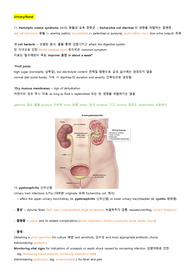
    11. Hemolytic uremic syndrome (HUS) 용혈성 요독 증후군 > Escherichia coli diarrhea 의 생명을 위협하는 합병증
    red cell hemolysis 용혈 (> anemia, pallor), low platelets (> petechiae or purpura), acute kidney injury (low urine output) 초래
    *E coli bacteria > 오염된 음식, 물을 통해 감염시키고 attack the digestive system
    장 자극으로 인한 Blood-streaked stool 핏자국은 common symptom
    치료는 탈수예방이 목표, improve 호전 in about a week*
    *Fruit juices
    high sugar (osmolality 삼투압), low electrolyte content 전해질 함량으로 급성 설사에는 권장되지 않음
    normal diet (solid foods) 지속 시 diarrhea 의 duration and severity 단축되므로 권장됨
    *Dry mucous membranes > sign of dehydration
    어린이의 경우 즉시 치료, as long as fluid is replenished 되는 한 생명을 위협하지는 않음

    출처 : 해피캠퍼스

  • NCLEX 요약정리 (+NGN 포함) – 아동간호 Respiratory

    목차

    없음

    본문내용

    Respiratory
    1. Cystic fibrosis (CF) inherited autosomal recessive disorder 유전성 상염색체 열성 장애
    – dysfunction of epithelial cells 상피세포 and pancreatic exocrine glands
    상피세포 손상 > thickened secretion > 작은 기도, 외분비관, 장 내벽을 막는 mucus plugs 형성
    췌장 외분비선 기능장애 > digestive enzymes 소화효소 (eg, amylase, lipase) 방출 억제, proteins, carbohydrates, fats 분해 X
    – plan of care > multidisciplinary 다학제간 접근
    – interventions > 호흡기능 촉진, intestinal blockage 장 폐색 방지, 영양 촉진, 감염 예방
    Aerobic exercise > muscle strength 근력 향상, lung capacity 폐활량 증가, 기도 분비물 thinning 희석
    Chest physiotherapy 물리요법 > sticky 분비물 제거, airway clearance 청소
    Social support services
    high-fat 고지방, high-calorie 고칼로리 diet recommended
    restriction 제한 sticky 끈적 sinusitis 부비강염 barrel chest 술통가슴 vas deferens 정관 inspissated 농축된

    출처 : 해피캠퍼스

  • NCLEX 요약정리 (+NGN 포함) – 아동간호 Neurologic

    목차

    없음

    본문내용

    Neurologic
    2. Bacterial meningitis 세균성 수막염 > droplet precautions (eg, surgical mask, private room), antibiotic therapy 우선적
    – increased ICP (complications) > lead 이어질 수 있음 to nerve ischemia 신경 허혈, permanent functional impairment
    영구 기능 장애 (eg, hearing loss, visual impairment 시각장애, paralysis), brain damage, herniation, and death
    *발작 위험 多 > low-stimuli environment (eg, low lighting, minimal noise, uninterrupted 연속된 periods of rest) 및
    seizure precautions (eg, padded side rails)
    *increasing head circumference > increased CSF volume, increased ICP
    8. Bacterial meningitis > prompt identification and immediate treatment vital
    caused by specific types of bacteria, including group B streptococcal, meningococcal, or pneumococcal pathogens

    출처 : 해피캠퍼스